BRICS 2026: New Delhi Summit to Test the Future of the Emerging Global Order.
political • 2026-08-27 08:50:32
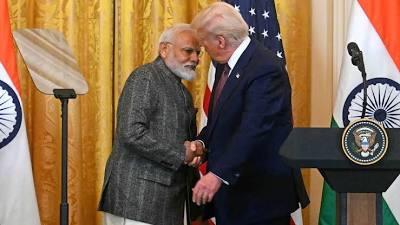
The Bharatio Times | World Affairs | Special Report NEW DELHI —India is preparing to host the 18th BRICS Summit on September 12–13, 2026, at Bharat Mandapam in New Delhi, bringing together the leaders of the expanded BRICS grouping at a time when global trade, geopolitical alliances and the international financial system are undergoing major changes. India assumed the BRICS chairship on January 1, 2026, and has placed “Building for Resilience, Innovation, Cooperation and Sustainability” at the centre of its presidency.
The summit is expected to be much more than a traditional meeting of emerging economies. India is attempting to use its chairmanship to push BRICS towards practical cooperation in trade, technology, finance, innovation, sustainable development and global governance. while strengthening the voice of developing countries in international institutions.
A Bigger BRICS Comes to New Delhi
BRICS has changed dramatically since its original five-member format. The group now has 11 full members: Brazil, Russia, India, China, South Africa, Egypt, Ethiopia, Iran, the United Arab Emirates, Indonesia and Saudi Arabia.
Alongside them, BRICS has also created a Partner Country category. The official BRICS India 2026 website lists 10 partner countries: Belarus, Bolivia, Cuba, Kazakhstan, Malaysia, Nigeria, Thailand, Uganda, Uzbekistan and Vietnam**. ([BRICS 2026][2])
This distinction is important because becoming a partner country does **not** mean becoming a full BRICS member.
Will a new country join BRICS in 2026?
There is considerable international interest in further BRICS expansion, but as of August 27, 2026, there is no officially confirmed announcement that another country will become a new full BRICS member at the September summit**.
The more immediate expansion of the organisation has therefore been through its partner-country system. The 2026 BRICS process is also giving partner countries a greater role in meetings and cooperation mechanisms.
If New Delhi announces another membership expansion during the summit, it could become one of the most significant outcomes of the meeting—but it should not be presented as decided until the BRICS members formally announce it.
Trade and the BRICS Economic Partnership
One of the most important economic discussions will be how BRICS members can increase trade among themselves while making supply chains more resilient.
At the August BRICS Trade Ministers' Meeting in Jaipur, members advanced work on the BRICS Economic Partnership Strategy 2030 while also agreeing on measures aimed at improving access to finance for small and medium-sized businesses. India has also promoted cooperation on global value chains and more diversified trade.
The New Delhi summit could therefore focus on reducing trade barriers, increasing services trade, improving logistics and strengthening supply chains across member economies.
Local Currencies and Cross-Border Payments
Another closely watched issue will be **cross-border payments and greater use of national currencies in trade**.
BRICS countries have for years discussed ways to make international transactions easier without excessive dependence on traditional financial channels. However, talk of a completely new BRICS currency should be treated carefully.
There is currently no officially launched BRICS common currency.Instead, the practical direction has been towards improving payment connectivity, encouraging local-currency settlements and developing alternative financial mechanisms.
That means the September summit could produce progress on payments without necessarily announcing a single BRICS currency.
AI, Technology and the Next Industrial Revolution
Technology is expected to be another major pillar of India's BRICS agenda.
India has already used its chairship to promote cooperation in start-ups, artificial intelligence, digital technology, industrial innovation and emerging technologies. At the BRICS Industry Ministers' Meeting, India proposed a **BRICS Incubator Network and BRICS Startup Innovation Fund, while members advanced cooperation in areas including photovoltaics and MSMEs. ([Press Information Bureau][5])
For India, this could be particularly important. New Delhi wants BRICS cooperation to move beyond traditional discussions about trade and geopolitics and towards practical technology partnerships that can generate jobs, investment and innovation.
Climate, Energy and Sustainable Development
Energy security and climate change will also remain important.
BRICS members include some of the world's largest energy producers and consumers, giving the grouping an important role in discussions about oil, gas, renewable energy, electricity networks and future energy technologies.
India's BRICS programme has already included cooperation on smart grids and energy storage**, while energy ministers have worked on mechanisms for deeper research cooperation.
The challenge will be balancing rapid economic development with the pressure to reduce emissions and expand clean-energy capacity.
Global Governance and the Voice of the Global South
Perhaps the biggest political question is whether BRICS can strengthen the influence of developing and emerging economies in global institutions.
Members have repeatedly argued for reforms to institutions such as the **United Nations and the international financial system**, seeking greater representation for developing countries.
The New Delhi summit will therefore be watched for its position on global governance, international trade, development finance and the role of emerging economies in shaping global rules.
India-China Relations Add Another Layer
The summit also carries special significance for India-China relations.
Chinese President Xi Jinping is expected to travel to India for the summit, potentially making it his first visit to India in seven years, although Reuters reported that his travel plans were still being finalised. The possibility of his visit comes after years of tension between New Delhi and Beijing following the 2020 border crisis.
If Xi does attend, the BRICS gathering could provide an important opportunity for the two Asian powers to manage differences while expanding cooperation in areas where their interests overlap.
Russian President Vladimir Putin is also expected to attend, according to the Kremlin, adding further geopolitical weight to the meeting.
What Could Make the 2026 Summit Different?
The real significance of the New Delhi summit may not lie in one dramatic declaration. Instead, its importance could emerge from several smaller agreements that gradually reshape BRICS cooperation.
A successful summit could produce stronger cooperation on trade and investment, digital payments, AI and technology, start-ups, energy, climate action, agriculture, healthcare, education, logistics and development finance.
India's challenge will be to maintain consensus among a group whose members have very different political systems, economic interests and foreign-policy priorities.
The Bigger Picture
BRICS is no longer simply the five-country economic grouping that emerged in the 2000s. With 11 full members and a growing partner network, it has become a much broader platform connecting major economies across Asia, Africa, the Middle East and Latin America.
The September summit in New Delhi will therefore be closely watched not only for **who joins BRICS next**, but for whether the organisation can turn its growing membership into concrete economic and technological cooperation.
For India, the summit is also an opportunity to demonstrate that its BRICS presidency can deliver practical results rather than only political statements.
The Bharatio Times | Special World Affairs Report
Reporting based on information available as of August 27, 2026.
Read More